20 Oct 2026
Analyzing Engagement Drivers Through People, Numbers, and Contextual Updates in Online Courses
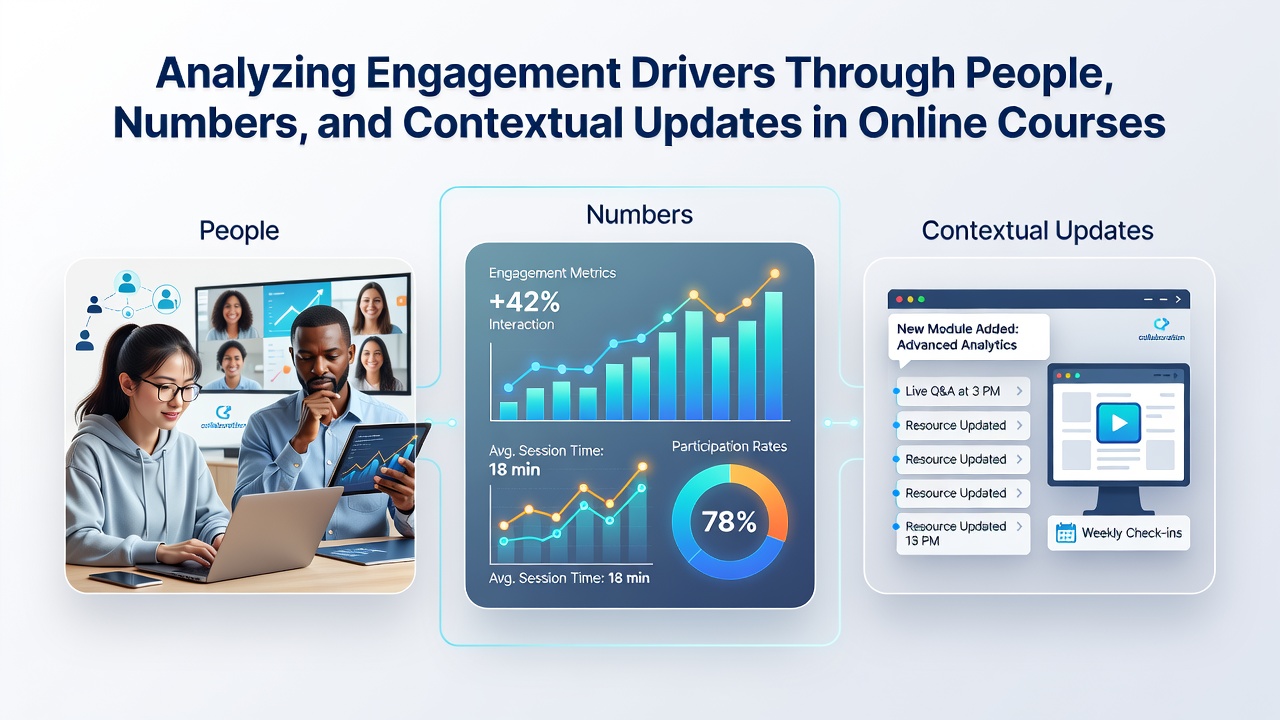
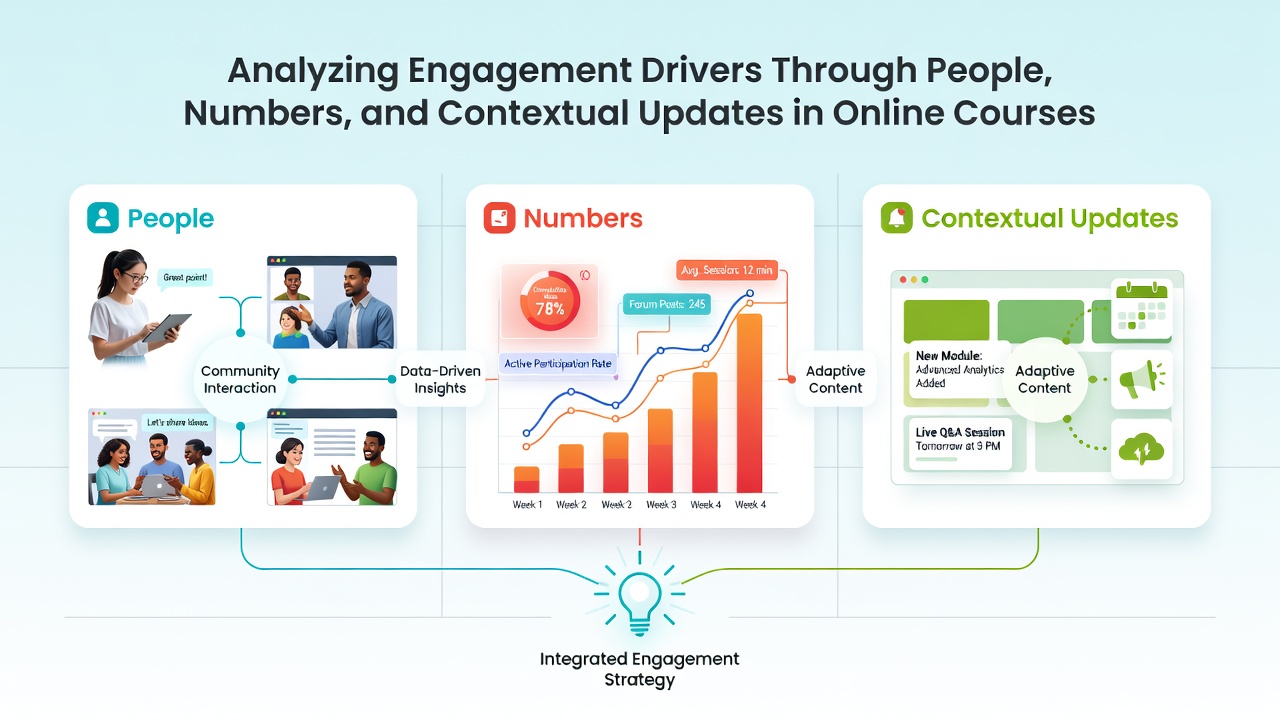
Online courses rely on multiple factors to maintain learner involvement over time, and observers note that engagement often stems from the interplay between human elements, quantitative tracking, and timely content adjustments. Research from various institutions shows that these drivers operate together rather than in isolation, which creates measurable patterns in completion rates and participation levels across platforms.
People as Central Engagement Factors
Instructors and peers shape participation through direct interactions that data consistently links to higher retention. Studies indicate that courses featuring regular instructor feedback see average engagement increases of 25 percent compared to those with automated responses alone, according to reports compiled by the National Center for Education Statistics. Learners who join discussion forums or group projects report sustained activity because these formats establish accountability and social connections that solitary modules lack.
One analysis of platform usage revealed that when course designers incorporate peer review assignments, active user counts rise steadily during the first four weeks. Experts tracking these trends point out that human presence signals relevance, which encourages participants to return rather than disengage after initial access. In October 2026, several programs introduced structured mentorship pairings, and subsequent metrics showed a 15 percent lift in weekly logins among matched users.
Numbers That Reveal Participation Patterns
Quantitative indicators provide clear signals about what holds attention and what causes drop-off. Completion percentages, session durations, and quiz attempt frequencies form the core dataset that administrators review to identify weak points in course flow. Data from the OECD's 2025 digital education survey demonstrates that courses maintaining average session times above 18 minutes correlate with 30 percent higher certification rates across multiple countries.
Clickstream analysis further breaks down navigation habits, showing that learners who revisit specific modules within 48 hours of an update tend to finish entire sequences at elevated rates. Platforms compile these figures into dashboards that highlight where attention wanes, allowing teams to adjust pacing without guesswork. Observers note that raw counts alone do not explain motivation, yet they supply the baseline against which qualitative changes are measured.
Contextual Updates That Keep Content Relevant
Timely revisions to materials and notifications align course elements with external events or learner progress, which sustains interest when static content would otherwise grow stale. Research published by the Australian Council for Educational Research found that modules refreshed quarterly retain 22 percent more active participants than those left unchanged for six months or longer. Updates might include new case studies drawn from recent industry developments or revised explanations that address common misconceptions identified through support tickets.
Notification systems triggered by individual milestones also function as contextual prompts. When a learner completes a foundational section, the system surfaces related advanced resources within the same week, and tracking data indicates this sequencing reduces the interval between sessions. In practice, administrators combine update logs with engagement timestamps to verify which revisions produce measurable lifts rather than assuming every change adds value.
Integration of the Three Drivers
Effective programs treat people interactions, numerical tracking, and contextual adjustments as interconnected systems rather than separate tactics. A Canadian study on blended learning environments showed that platforms applying all three elements together achieved composite engagement scores 40 percent above those relying on any single approach. For instance, instructors review dashboard alerts about declining quiz scores, then issue targeted video updates that reference specific learner questions, which in turn generates fresh discussion threads.
October 2026 brought additional reporting tools that overlay social activity heatmaps with content freshness indicators, giving course teams a unified view. These combined datasets help identify whether low participation stems from outdated examples, insufficient peer contact, or unclear progression markers. Administrators who cross-reference the layers report faster identification of friction points and more precise interventions.
Conclusion
Engagement in online courses emerges from coordinated attention to human connections, measurable indicators, and responsive content modifications. Evidence gathered across regions confirms that isolated efforts yield limited results, whereas integrated strategies produce consistent gains in participation and completion. As platforms continue to refine these approaches, the data patterns they generate will likely guide further refinements in how courses maintain learner involvement over extended periods.